The AI Slop Flood Is Here. Hand-Drawn Work Is What Survives.
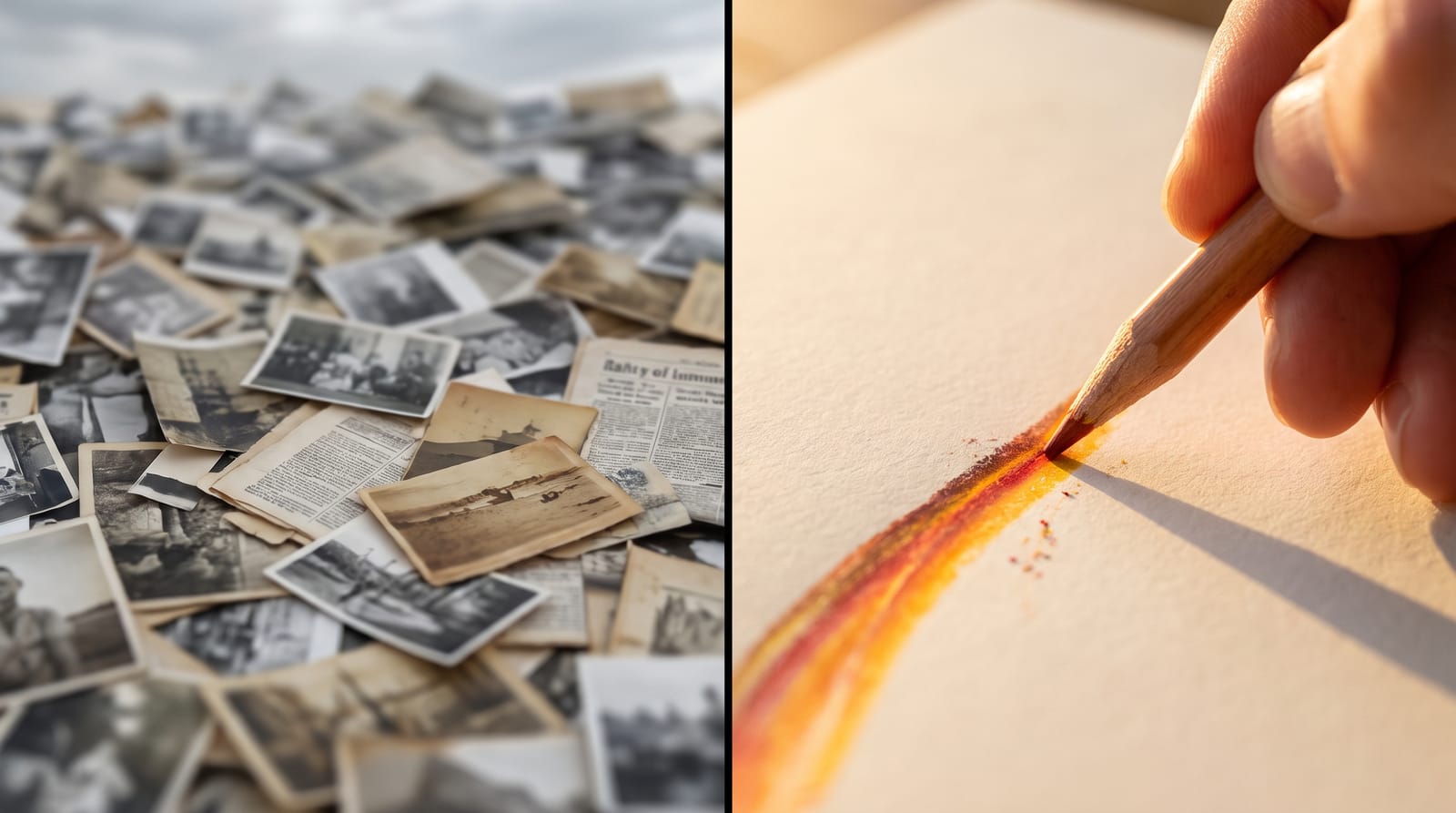
On October 1, 2026, arXiv did something it almost never does: it told researchers to slow down.
arXiv is the open-access repository where much of the world posts research first. Starting that day, an author may submit only 2 papers per calendar month, with at most 3 active submissions at any time. The excuse is not disk space or editorial snobbery. The reason is AI.
The numbers behind the flood
arXiv received 9,869 submissions in September 2016. It received 20,569 in September 2024. It received 40,363 in September 2026 — roughly a doubling in the last 2 years, and a sixfold increase in the computer science category.
Behind those numbers sits a volunteer moderation team, and their complaint is specific: thin papers of narrow scope, “salami” papers that slice one study into several, and a marked rise in dense, AI-written text. Cheap generation is eating the hours reviewers used to spend on careful work — and delaying the papers that deserve attention.
arXiv has been tightening the gates for a year. In January 2026 it made new authors earn an endorsement from someone already in the system. In May 2026 it began banning repeat offenders for a year. The rate limit is the loudest signal yet: the flood is no longer predicted. It has arrived.
Not just an academic problem
Academia is simply where the counting is easiest. The same wave has been building across everything built on text and images: articles, stock illustrations, product pages, newsletters, and yes — coloring books. When producing costs almost nothing, every feed fills with work that is average at best, and finding the good stuff gets harder for everyone.
That is the real cost of slop. It is not that machine-made work exists. It is that it buries the work that was made with care.
The watermark that fails the test
Two days later, on October 6, 2026, The Register reported OpenAI’s answer to Europe’s AI Act: a text watermark called textGrain, applied only inside the European Union. The idea is defensible — label machine text so machines can read the label. The results are weaker than the demo suggests:
- Detection finds 80% of watermarked text in 200-word passages, and 95% in 400-word passages.
- Swap 10% of the words with synonyms, and detection falls from 92% to 66%.
- Replace 25% of the words, and the signal survives in only 17% of cases.
A watermark that a cheap edit can erase is not a firewall. It is a speed bump. Provenance signals will keep improving, but nobody should build their trust in human-made work on top of them.
What survives the flood
- A visible human. People increasingly want to know who made this — and why. A name, a process, a story travels further than a texture.
- Taste. Generated work converges on the average of its training data. A point of view does not.
- Imperfection. A line that wobbles proves a hand held the pen. That proof is starting to have value.
- Depth over volume. One book drawn line by line beats a hundred generated pages that nobody remembers.
What to do this week
- Show the process. Publish one piece with the rough version sitting next to the final one.
- Sign your work where it travels — in descriptions and pages that can be shared without losing the author.
- Go deep in one direction. In a flood, depth is the only thing that does not wash away.
If you want to see what the slow way looks like: every page in Blooming Beauty and Timeless Intricacy is drawn by hand, one line at a time — the opposite of a prompt. And if you want the science behind the pause, read why coloring calms the mind.
Sources